Share
Will 2026 Be the Year Digital Discovery Leaves Traditional Browsers?
When it comes to visibility, here’s where we're predicting search, AI, and hospitality will collide next.
2026 Will Be the First Full Year We Shift Away from Traditional Search
AI assistants, AI browsers, and conversational agents are rapidly becoming the new front door to the internet, compressing the search journey into a single answer, a single recommendation, or a single action. Instead of navigating lists of links, consumers increasingly rely on AI to interpret intent, evaluate options, and deliver immediate clarity.
No sector will feel this transition more directly than hospitality. Choosing a hotel, restaurant, or event space is inherently decision-heavy, and AI excels at simplifying complex choices into personalized guidance.
Together, these shifts set the stage for a radically different discovery landscape. As AI-driven discovery becomes the norm, hospitality brands sit at the center of the disruption, but also at the forefront of the opportunity. Here are the trends we believe will define how guests find (and choose) hospitality brands in 2026.
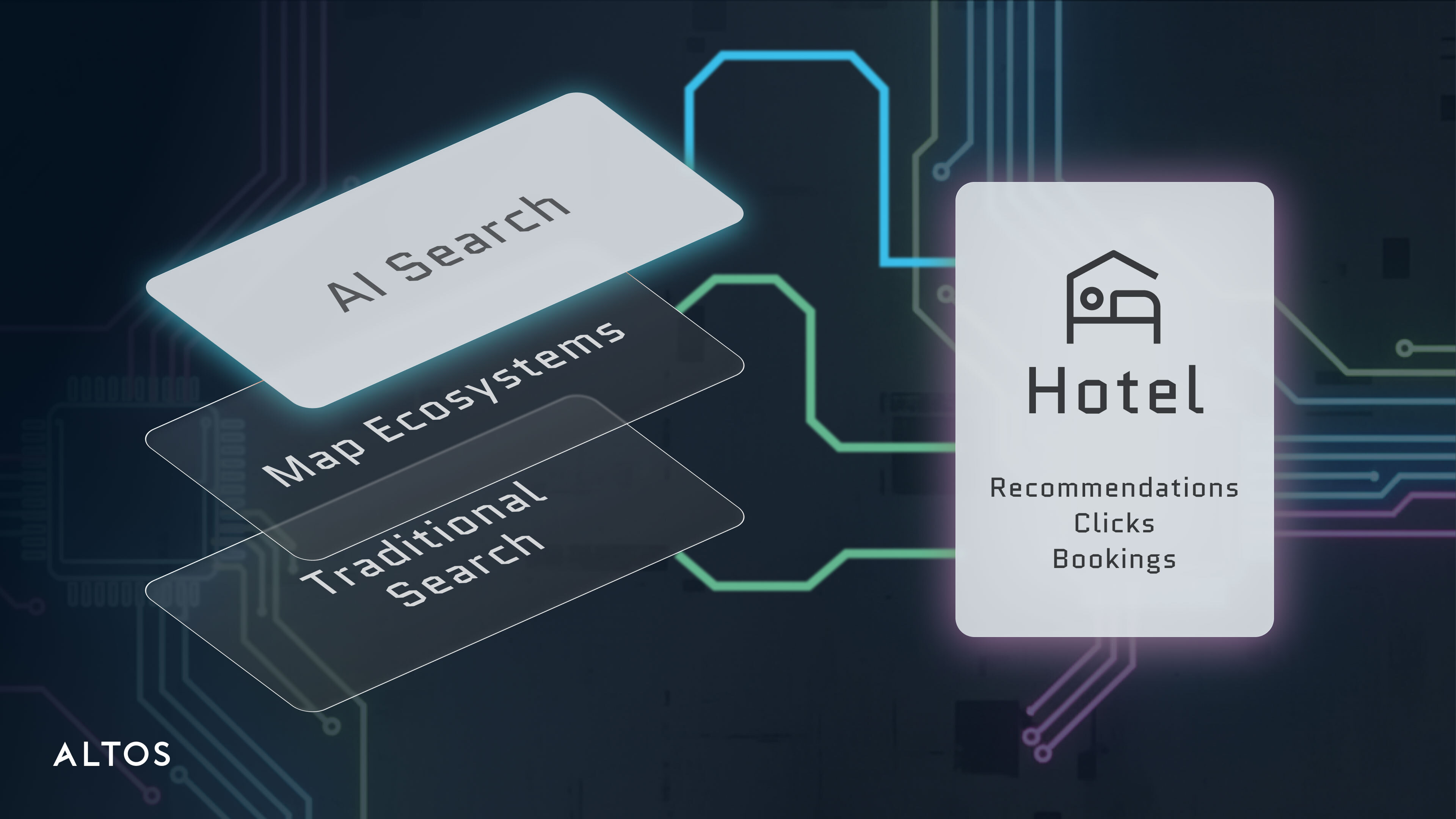
The 2026 Visibility Forecast: Trends to Watch in the New Year
Trend #1: AI Engines Will Become the First Touchpoint for Local Discovery
We’ve said it once, and we’ll keep saying it: the era of typing a question into a search bar is giving way to something more intuitive. Tools like ChatGPT, Gemini, and Perplexity are quickly becoming consumers’ first stop when looking for where to stay, what to eat, or which local businesses to trust.
Instead of browsing endless links, people now expect a single, confident recommendation. They challenge AI by asking a simple question, and AI engines are increasingly ready to provide those answers. Their models pull from broad data sets, user intent, and contextual signals to serve answers that feel personalized.
Hospitality Will Feel This Shift First
No category is simultaneously more vulnerable, but better positioned, than hospitality. Choosing a hotel, restaurant, or attraction is inherently experiential, and AI excels at simplifying complexity into tailored suggestions. Whether it’s “Where should I stay in Portland for under $200?” or “Find the best family-friendly restaurants near me,” AI assistants can compress the entire search funnel into one conversational exchange.
The businesses that appear (or don’t appear) in those recommendations will see very real wins and losses. It’s crucial to bear in mind that AI engines reward clarity. If a business isn’t well-defined across the web, it becomes harder for these systems to confidently recommend it.
Trend #2: Zero-Click Will Become the Dominant Search Behavior
For years, zero-click search has been steadily rising. We expect 2026 to be the tipping point. As AI engines, enriched SERPs, and conversational search continue to expand, users are becoming conditioned to get what they need without ever clicking through to a website. The search journey is collapsing, and the expectation is shifting from “give me links” to “give me answers.”
For hotels and restaurants, this shift is monumental. Your potential guests, rather than relying on your website, are discovering you through the information AI-driven discovery sources already have about you.
But don’t be mistaken. Your website no longer being the arena of discovery doesn’t mean the content is irrelevant. In fact, making sure AI does have the right answers to provide is dependent upon the accuracy, clarity, and completeness of your content. Travelers expect instant clarity on price ranges, availability, amenities, pet policies, and neighborhood context. Diners expect menus, dietary options, hours, and reviews to be surfaced directly in the search experience. As a brand, it’s your responsibility to make that information crystal clear.
It’s important to note that zero-click behavior puts enormous weight on consistency, and not just on your website. Consider your multi-channel presence: your business profiles, social media profiles, citations, structured data, and third-party listings must all align to give search engines confidence in your entity.
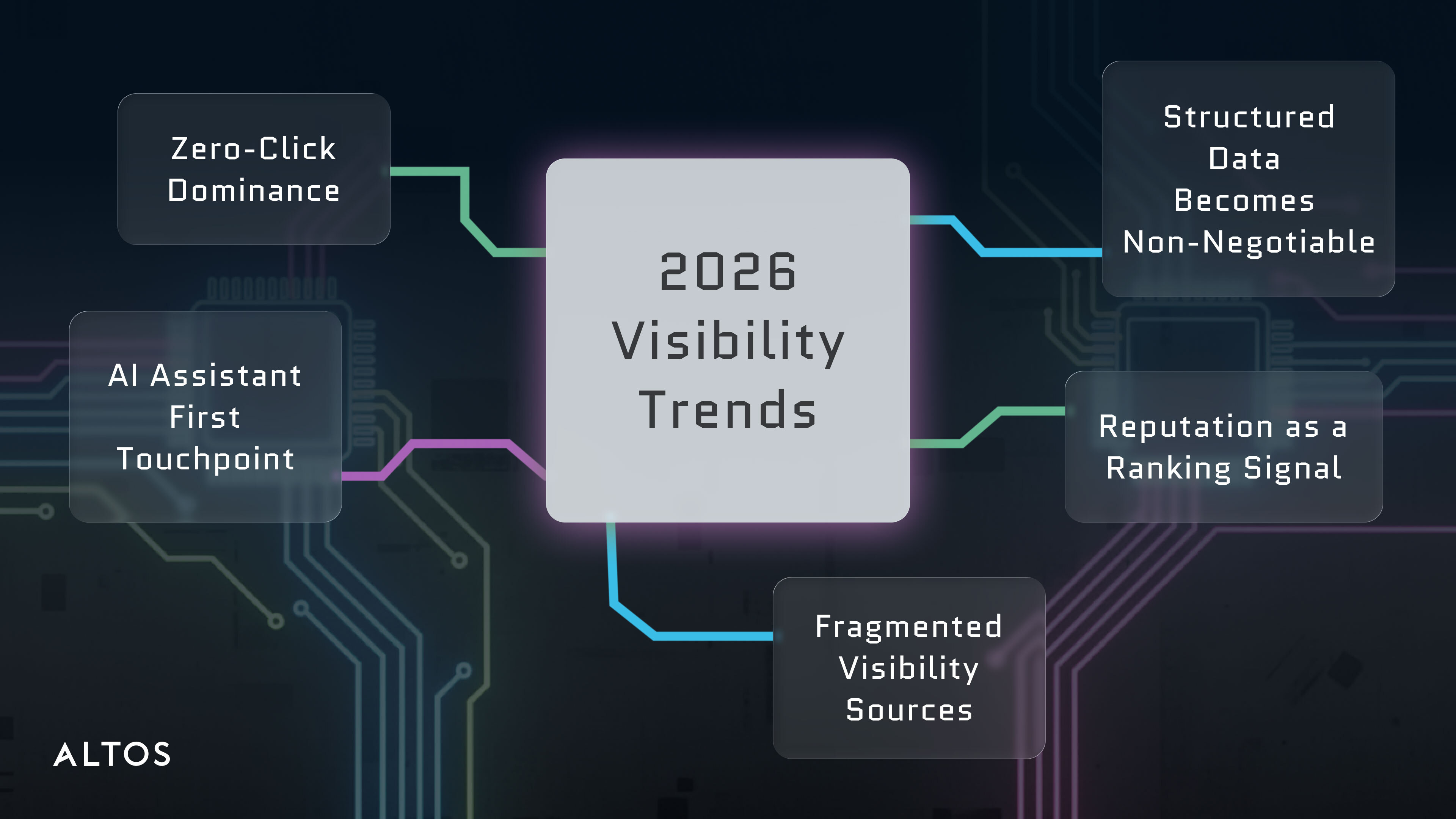
Trend #3: Reputation Will Become a Core Ranking Signal
In 2026, your online reputation will directly influence whether you surface in AI-driven results, conversational search answers, and local recommendations. Reviews, ratings, and real-time sentiment are critical signals that feed into an entity’s trust, and that trust is what determines whether AI engines feel confident recommending a business at all.
AI engines rely on data they can verify, and user-generated sentiment is one of the most powerful validation signals they have. High-volume, consistent, authentic reviews help AI models build a stable, accurate understanding of a business’s quality, which in turn influences whether it gets recommended.
Patterns matter, too. Models evaluate:
- Sentiment over time
- Recurring strengths or weaknesses
- Response patterns from the business
- The credibility and volume of reviews across platforms
Reputation Experience Optimization (REO) has been a rising conversation, but 2026 will be the year it becomes a necessity. As AI systems prioritize trust and sentiment over traditional SEO signals, managing reputation becomes a technical discipline as much as a marketing one.
Few industries depend on sentiment more than hospitality. Choosing a hotel or restaurant is an emotional, trust-based decision, and guests rely heavily on peer experiences to inform their choices. AI engines understand this and will weigh reputation accordingly. Hospitality brands who invest in consistent, high-quality experiences (and make those experiences visible through strong reviews) will be the ones AI trusts most.
Trend #4: Structured Data Will Decide Winners and Losers
We’re anticipating that 2026 will see every competitive business embracing schema-rich architectures. AI engines rely on structured data to understand who you are, what you offer, and whether you’re relevant to a user’s intent. In a world where AI is deciding what gets shown, structured data becomes your voice.
We’ve said again and again how AI browsers understand information. The way they accomplish this is through structured data, which gives these systems the context they need to interpret information and find answers. Schema-rich architectures are what turn websites into machine-readable sources.
For hospitality brands, investing early in structured data will be a major competitive advantage. Hotels should prioritize markup for room types, amenities, rates, and property features, while restaurants need clear schema for menus, dietary options, and operating information. Consistency across listings and real-time data updates will further strengthen entity understanding and boost visibility.
Trend #5: Visibility Fragmentation Will Continue
Marketers can no longer assume that winning on Google means winning everywhere, because discovery now happens in dozens of places at once. 2026 will be the year of visibility fragmentation.
It might sound like it, but this fragmentation isn’t something to fix. It’s simply the new norm. The brands that succeed will treat visibility as an ecosystem, understanding how entity strength, structured data, sentiment, and real-time accuracy flow across platforms.
Marketers will need unified visibility systems, like Altos EO+, to consolidate local SEO, structured data, reputation, and AI optimization. The goal: ensuring every platform sees (and understands) the same strong entity.
What This Means for Hospitality Specifically
In 2026, the winners will be the hospitality brands that make themselves unmistakably clear, trustworthy, and machine-readable across every discovery channel. As the new year approaches, review and re-evaluate the ways you’re delivering and structuring the most important information about your services:
- Rooms & Rates. Synchronize real-time pricing, availability, and amenities across platforms to surface more frequently in AI recommendations, especially in zero-click environments.
- Dining Experiences. Menus, dietary options, pricing, and hours must be fully structured and consistently distributed.
- Event Services. Create clear schemas for event spaces, capacities, amenities, and reviews to appear in AI-driven planning tools and conversational searches.
- Proximity. Proximity remains a major signal for discovery, but entity strength will decide which nearby options get recommended when you go toe-to-toe with local competition.
The EO+ Prediction Model: How Brands Should Prepare
For when you need a visibility strategy that extends far beyond traditional SEO (and trust us, you do), there’s EO+, our expanded entity optimization framework helping hotels and restaurants strengthen how they appear across multiple sources.
To stay competitive in 2026, hotels and restaurants should begin laying the groundwork now:
- Audit entity signals
- Remove visibility gaps
- Strengthen REO
- Build structured content hubs
- Test across AI engines
- Shift KPIs from clicks to discovery metrics
If you’re ready to see where your visibility stands, start with an EO+ Visibility Audit.
Let’s build your 2026 advantage today.
See How Optimized Your Site is for AI
See how AEO and GEO engines interpret your brand, and how EO+ can unlock better performance across the board.
Let’s Talk Strategy
If you're looking for a partner who understands digital-first marketing and web design, we’re ready when you are.

%20(1).jpg)